
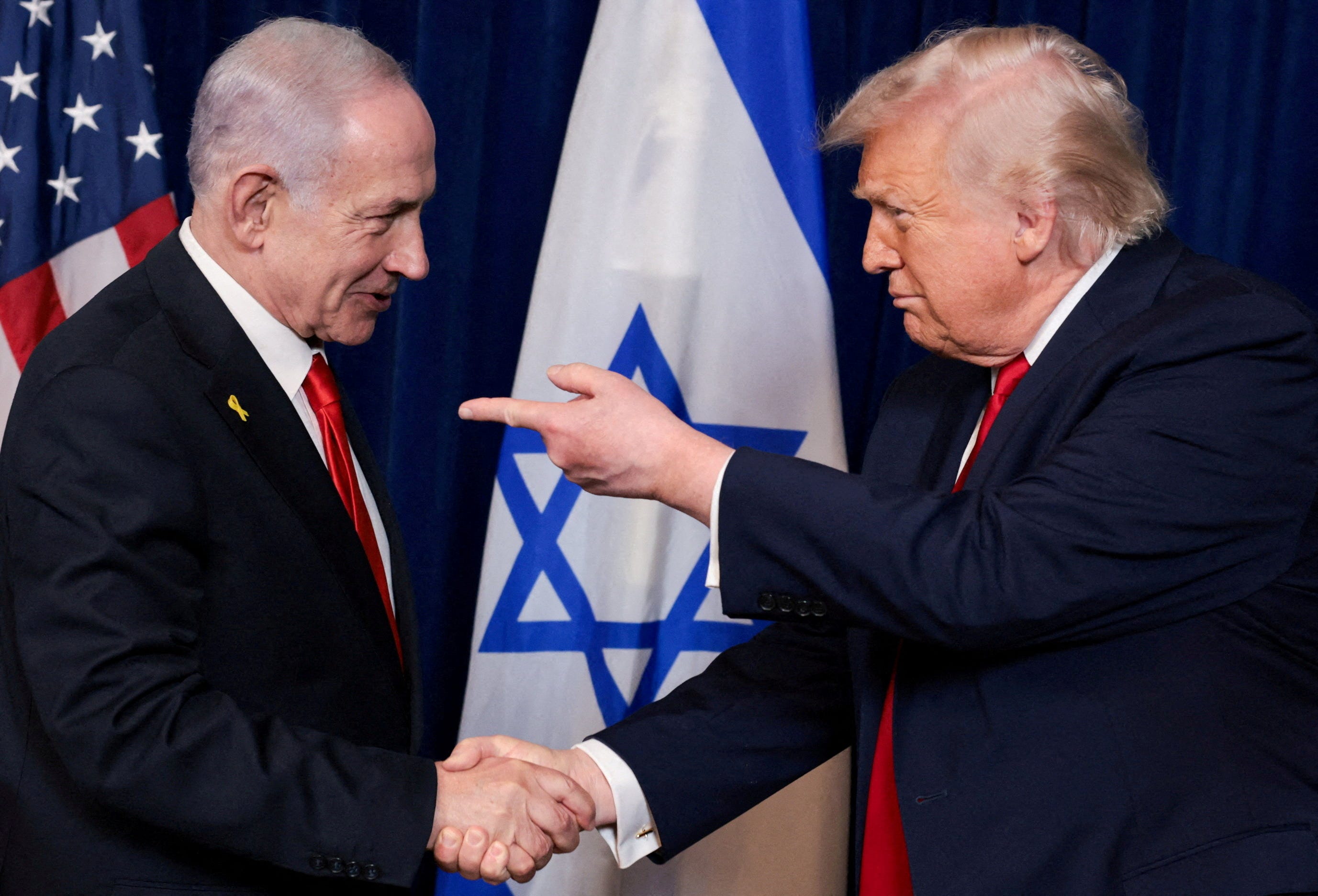
Trump Needs This War More Than He Wants Peace
Democrats are taking the wrong lesson from the Graham Platner saga, and the largest library in the country is pulling its own books
Good morning, AlterNet America family.
Welcome to the Saturday Wrapup, where I get you the week’s news as I consume my morning caffeine with you.
Thank you again for helping us reach 1,000 paid subscribers. Your support has allowed us to remain at #2 in Rising News on Substack for our first three months. It’s also allowed us to hold Substack Lives with other independent journalists, so you can get all your progressive news in one subscription.
If you’re not yet a paying member, I’m asking you to join us today. Independent media has never mattered more. Support our people-powered movement and upgrade your subscription today.
Look, at the rate Trump flip-flops, this newsletter wouldn’t have the space for any other stories if we covered every single development in Iran. But what happened this week is big, and will continue driving up costs around the world. Let’s talk about it.
Trump Started a War He Has No Idea How to Finish
Three weeks. That’s how long it took to go from a signing ceremony at the Palace of Versailles to 170 American strikes on Iran in 48 hours.
Iran attacked three commercial ships in the Strait of Hormuz over the July 4th weekend. Trump declared the ceasefire “over” on Monday. By Tuesday, CENTCOM had hit more than 80 targets across southern Iran: air defenses, missile sites, coastal surveillance, drone launch pads, and more.
By Wednesday, the U.S. was striking cities deeper inland: Iranshahr, Chabahar, Bandar Abbas, a railway bridge in the northeast. A firefighter was killed at an airport. Iran’s Revolutionary Guard hit back at U.S. bases in Kuwait and Bahrain. Air raid sirens went off across the Gulf.
This was all happening while millions of Iranians were burying their former Supreme Leader.
The administration’s position is that Iran violated the memorandum of understanding by attacking commercial ships. That’s true. What’s also true is that the U.S. Treasury revoked its temporary suspension of Iranian oil sanctions less than 20 days after the deal was signed — well before any ships were hit — after the MoU said the U.S. would waive sanctions for 60 days.
Iran’s parliament speaker responded by saying the Strait of Hormuz would only reopen under “Iranian arrangements, not American threats.” Trump said Iran had called seeking a new deal but he wasn’t sure they were “worthy” of one. Shipping through the strait has dropped to 13 vessels in 24 hours. Before the war, it was 110.
The cost of this war to American taxpayers is $113 billion. It has produced the largest disruption to global oil markets in history. Flights across the Middle East have been grounded for months. Gulf states that wanted nothing to do with this conflict are now being hit with Iranian missiles in their own airspace.
U.S. and Iranian negotiators are engaged in what officials describe as “technical discussions.” The administration says it is “still committed to finding a resolution,” but they aren’t acting like it.
And make no mistake, Trump has a lot to gain from the prolonged conflict, whether it’s to win Israel’s favor or because wartime presidents don’t typically lose midterms. It’s also entirely possible he may not want to keep it going so much as he has no idea how to stop it.
Trump killed a Supreme Leader, and there’s no version of peace that doesn’t require concessions he’ll never make. So instead you get three-week ceasefires and Versailles photo ops before the strikes continue. Forever.
The Real Lesson Democrats Should Learn From Graham Platner
Graham Platner’s campaign is over, and the establishment is already writing the obituary it wanted to write all along: that progressives aren’t ready, that the left can’t vet its own candidates, and that this is what happens when you let an oyster farmer run for the United States Senate.
That’s the wrong lesson.
The right lesson is that Democratic voters in Maine looked at a man with a Nazi tattoo on his chest and a history of problematic comments on Reddit, and they still chose him. With 72 percent preferring him over their sitting governor.
The question the party should be asking is not “how did we let this happen?” The question is: what does it tell you about Janet Mills and the Democratic establishment that voters preferred this guy?
For one, it tells you AIPAC is poison, and so is the machine that protects it. Susan Collins took more money from AIPAC than from small donors, with the lobby bundled over $538,000 for her in a single filing period. Mills was hand-picked by Chuck Schumer and the DSCC to run a “safe” primary against a progressive challenger. Platner refused AIPAC money, and voters rewarded him for it.
For two, it tells you what really matters to voters. This wasn’t a litmus test of what accusations a candidate could survive. Platner didn’t survive the rape allegation, and he shouldn’t have. But nothing before that — the tattoo, the problematic Reddit posts, the Republican operative’s uncorroborated accusations — mattered more to the people of Maine than the kitchen table issues.
These aren’t fringe progressives. This is the majority of Democrats in a blue state. And the small but loud crowd still defending him might be more willing to reckon with the most recent allegation if the party hadn’t spent the previous ten months treating a Reddit post from 2013 with the same urgency.
There’s no denying that Platner’s charisma played a role in winning over voters. After all, what is progressivism if not believing in reform? Don’t we want veterans with first-hand experience of the military-industrial complex to become radicalized against it? Don’t we want the average Redditor to learn and grow out of their harmful beliefs?
Still, it is not Platner himself the voters liked. The voters liked Medicare for all, ending aid to Israel, and taxing billionaires. They were willing to tolerate a mess of a candidate because the alternative was a machine candidate bankrolled by the same people funding the bombs currently falling on children.
The Largest Library in America Is Pulling Its Own Books
The New York Public Library has 56 million items in its collection. It is the largest public library system in the country. It has hosted exhibitions on censorship, launched banned book clubs, and issued statements about the freedom to read for years.
And this week, insiders revealed that it has been quietly censoring its own book lists while discussing how to comply with the Trump administration’s demands.
Here’s the part that makes this especially hard to fight: NYPL is a 501(c)(3). It is not subject to Freedom of Information Act requests. There is no legal mechanism to force transparency. The only reason we know any of this is because people inside the institution decided to talk.
That’s how it works now. The government doesn’t need to burn the books. It just needs institutions to be afraid enough to pull them off the shelf before anyone asks. Book challenges hit 4,235 titles last year, the second-highest on record. Seventy-one percent of those challenges came from government officials and administrators.
This is why independent media matters, and it’s why AlterNet America exists. We don’t quietly comply, and we don’t need a FOIA request to tell you the truth.
If you’ve been reading AlterNet America for free, today’s a good day to change that. Become a paid subscriber and help keep the lights on at one of the last outlets that doesn’t need permission to publish.
We promise not to quietly remove this newsletter in the middle of the night.
—Ryan Rose, Co-Founder & Managing Editor, AlterNet America


