
The Epstein Files Are Never Coming Out
Here's why Trump really signed orders involving marijuana and psychedelics, and how the administration known for investigating and suing journalists celebrated "press freedom"
Good morning, AlterNet America family.
Welcome to the Saturday Wrapup, where I get you the week’s news as I consume my morning caffeine with you.
To our paying subscribers: thank you. Your support has allowed us to remain at #2 in Rising News on Substack for our first three weeks. It’s also allowed us to begin lining up exciting, exclusive live interviews in the coming weeks. You make this possible. That means everything.
If you’re not yet a paying member, I’m asking you to join us today. Independent media has never mattered more. Support our people-powered movement and upgrade your subscription today.
You know that joke “We investigated ourselves and found no wrongdoing”? Trump’s Department of Justice is doing that unironically. Let’s talk about it.
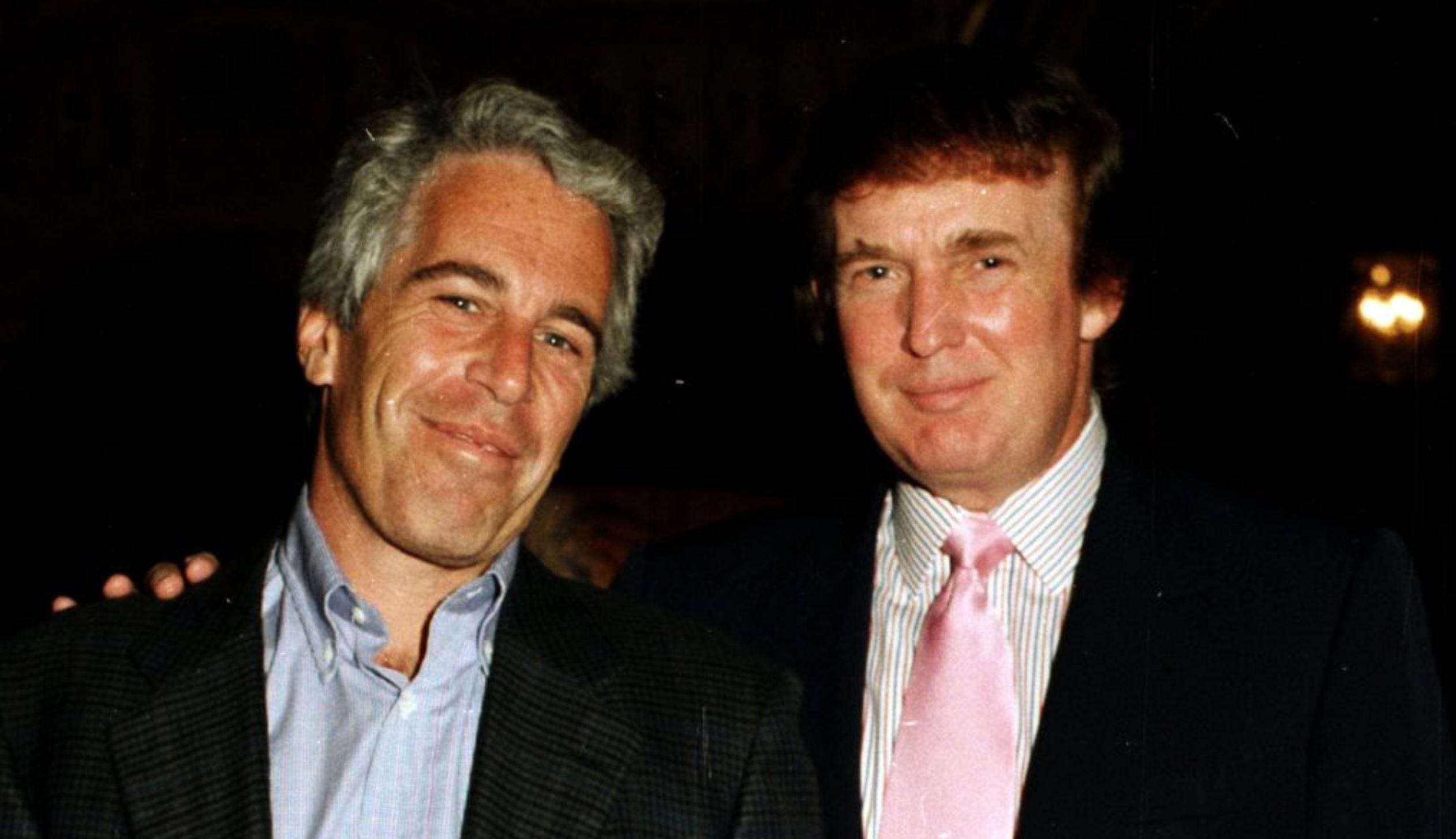
We Will Never See the Epstein Files As Long as Trump Is President
The Justice Department’s inspector general announced Thursday that it’s launching an investigation into whether the DOJ complied with the Epstein Files Transparency Act. The probe will focus on how the DOJ identified, collected, and produced responsive material, as well as its processes for redacting and withholding documents.
It sounds like accountability. It isn’t.
To understand why, you have to run the timeline. In February 2025, then-Attorney General Pam Bondi went on Fox News and told viewers that an Epstein client list was “sitting on her desk right now.” Months later, she denied any such list existed.
Trump, for his part, called the entire Epstein scandal a “hoax” designed to damage his reputation, and dismissed Republicans demanding the files as “stupid people.” Then public pressure became impossible to ignore, and Trump signed the Transparency Act into law in November after the bill passed the House 427 to 1.
The DOJ missed the law’s 30-day deadline for releasing documents. When the files finally came out in waves, hundreds of pages were entirely blacked out. Lawmakers from both parties accused the administration of using heavy redactions to protect powerful people.
Then things got weirder. Congressional members expressed bipartisan outrage after learning the DOJ had been tracking the search history of lawmakers who went to the department’s reading room to review unredacted files. The DOJ’s defense was that it logs all searches to protect victim information.
Then Trump fired Bondi. Reporting found he did so in part because of her handling of the Epstein files. Her replacement, Todd Blanche, is also Trump’s former personal defense attorney. He promptly declared that the DOJ had moved on from seeking accountability for Epstein’s victims.
That brings us to this week. Blanche’s DOJ now has an inspector general probe to point to whenever anyone asks questions. “We can’t comment on an ongoing investigation” is one of Washington’s oldest stall tactics, and the DOJ just handed itself a fresh one.
Meanwhile, Bondi has defied a congressional subpoena and refused to appear before the House Oversight Committee, shielded by a DOJ legal argument that she was subpoenaed in her official capacity and therefore no longer obligated to comply.
The inspector general’s office says it will release a public report when its work is complete. It’ll probably be left sitting on someone’s desk.
Trump’s Drug Policy: Weed, Shrooms, and Misdirection
In the span of five days this week, the Trump administration signed an executive order on psychedelics and reclassified medical marijuana. The vibes were immaculate. Joe Rogan was at the White House. Cannabis stocks surged.
Unrelated, surely, to the war in Iran, Epstein Files, ICE crackdowns, or any other story Trump wants out of the news cycle.
Trump signed the psychedelics executive order on Saturday, expediting federal review of drugs like psilocybin, LSD, and MDMA for mental health treatment. Standing beside him at the signing were Health and Human Services Secretary Robert F. Kennedy Jr. and notably Rogan, the podcaster who helped carry Trump to victory in 2024.
On Thursday, acting Attorney General Todd Blanche signed an order shifting state-licensed medical marijuana out of Schedule I — the same category as heroin — and into Schedule III, the tier that includes ketamine and Tylenol with codeine.
The policy substance is real, if limited. What’s more revealing than the policy is the guest list. Rogan has recently become critical of the administration over ICE tactics and Trump’s war against Iran, which he launched in late February alongside Israel.
Trump’s treatment of Rogan stands apart from how he’s handled other right-wing critics, seeing as Tucker Carlson and Candace Owens have been attacked relentlessly for the same kinds of objections. Meanwhile, Rogan got an invite to the White House and a text from the president.
Rogan later said on his podcast that he had personally raised the psychedelics issue with Trump, and that Trump’s response was: “Sounds great. Do you want FDA approval? Let’s do it.”
That’s not drug policy. That’s customer service for a specific demographic: young men who listen to three-hour podcasts, take cold plunges, and are starting to ask questions as gas prices rise.
Keeping those guys in the fold requires something more tangible than vibes. Weed and mushrooms are tangible.
The administration that declared fentanyl a weapon of mass destruction and ordered military strikes on drug boats just told Joe Rogan he can have FDA-approved psilocybin. The message isn’t about drugs. The message is: we’re still the cool ones. Don’t look at the numbers.
At the Press Freedom Dinner, Nobody Mentioned the Press Freedom Rankings
The United States is currently ranked 57th in the world for press freedom, sandwiched between countries we routinely lecture about democracy.
Reporters Without Borders releases its annual World Press Freedom Index on April 30. The United States has fallen every year for a decade. It went from 49th in 2015 to 57th last year, and the new ranking is expected to be worse.
This week gave them plenty to work with. The president banned the Associated Press from the White House; sued the New York Times, the Wall Street Journal, and CBS; defunded NPR and PBS; and had a journalist arrested for filming an ICE protest. Then he attended a black-tie dinner tonight in honor of the free press.
The White House Correspondents’ Dinner on Friday night was so controversial that no comedian would host it. More than 350 journalists signed a petition asking the people in that room to say something. Most went anyway, in tuxedos, and said nothing.
This is what the decline looks like up close. Not a sudden collapse, but a slow erosion of the institutions that are supposed to hold power accountable, while the people inside those institutions calculate what they can still afford to say.
We’re not doing that calculation. AlterNet America is independent, reader-funded, and answerable to nobody with a broadcast license or a merger pending before a Trump-appointed regulator.
We don’t have a parent company to protect. We don’t have advertisers to keep comfortable. What we have is the ability to say what we see, and readers who make that possible.
If the index going down bothers you, the answer isn’t to watch it happen. It’s to fund the journalism that doesn’t have to pull its punches. Become a paid subscriber today.
Thanks for reading. We’ll be here. We were not invited to the White House Correspondents’ Dinner.
–Ryan Rose
Co-founder & Managing Editor, AlterNet America


At least not until after midterms and after that they won’t matter because Trump will be impeached and convicted in the Senate, removed and then probably be forgotten which, to a narcicist like him, is worse than death!