
Even MAGA Can't Stomach Trump's Iran Deal
The World Cup has never been more divided as foreign fans and teams face heightened security, and Fox News now controls the screen in your living room
Good morning, AlterNet America family.
Welcome to the Saturday Wrapup, where I get you the week’s news as I consume my morning caffeine with you.
Thank you again for helping us reach 1,000 paid subscribers last week. Your support has allowed us to remain at #2 in Rising News on Substack for our first two months. It’s also allowed us to hold our first Substack Lives with independent journalists Erin Reed and Hamilton Nolan, so you can get all your progressive news in one spot.
If you’re not yet a paying member, I’m asking you to join us today. Independent media has never mattered more. Support our people-powered movement and upgrade your subscription today.
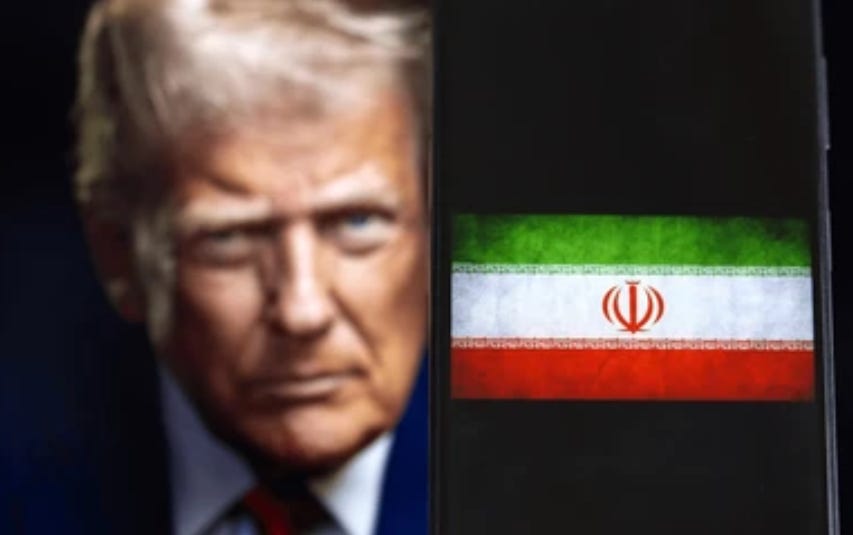
This week’s biggest story is Trump’s baffling $300 billion deal with Iran. I could tear it to shreds for you, but I’d rather let his own party do that.
Even Republicans Hate Trump’s Iran Deal
For years, the Republican Party had one unshakable foreign policy consensus: no deals with Iran.
The Obama-era nuclear agreement was a punching bag for every GOP senator who wanted to look tough. The “pallets of cash” became a meme. Trump himself pulled out of the deal in 2018, calling it an embarrassment.
Now Trump has signed his own memorandum of understanding with Tehran, and the backlash isn’t just coming from Democrats. The call is coming from inside the house.
The 14-point MOU, signed electronically on Sunday by Trump, JD Vance, and Iranian Parliament Speaker Mohammad Bagher Ghalibaf, commits both sides to an immediate end to military operations on all fronts, including Lebanon. Iran agreed to reopen the Strait of Hormuz, and the U.S. pledged to terminate all sanctions against Iran.
The centerpiece drew the most fire: a commitment to develop a plan providing $300 billion for Iran’s reconstruction and economic development.
The deal hasn’t been put to a vote, and most Republican senators are still hiding behind the excuse that they haven’t read the text. But as details keep leaking, the reactions keep getting worse.
Sen. Bill Cassidy of Louisiana didn’t mince words. He called the MOU “the worst foreign policy blunder in decades” and said Ronald Reagan was rolling over in his grave. His core complaint was blunt: Iran’s nuclear ambitions weren’t curbed, and Tehran just learned that threatening a critical shipping lane works, creating every incentive to do it again.
Rep. Thomas Massie of Kentucky, another Republican who lost a Trump-backed primary, pointed out that the $300 billion reconstruction figure is five times what Congress spends annually on American roads and bridges.
But it’s not just the exiled critics. Sen. Rick Scott, a Florida Republican on the Armed Services Committee, said he couldn’t imagine supporting $300 billion in funding for Iran. Sen. Thom Tillis of North Carolina said the deal falls short given what the conflict actually cost: 13 American service members killed and more than $100 billion spent on a war that lasted over 100 days.
Senate Majority Leader John Thune, the party’s top leader, told reporters he still hadn’t seen the final text and had “a bunch of things” he’d have questions about. Even Lindsey Graham, typically one of Trump’s most reliable defenders, offered only conditional support, saying the deal sounded good “if the Iranians will agree to it.”
Former Vice President Mike Pence broke with Trump publicly, arguing the U.S. should have demanded Iran dismantle its nuclear program, end its missile development, and cut ties with proxy forces. John Bolton, Trump’s own former national security adviser, called it a “big defeat for the United States” and said the whole negotiation was driven by fear of high gas prices.
The irony is almost too clean. Republicans spent a decade savaging Obama for negotiating with Iran, mocking the JCPOA as appeasement, and campaigning on maximum pressure. Now their own president has signed a deal that multiple Republican senators are openly calling worse than Obama’s. Cassidy called it “JCPOA-plus.”
Oil prices that sat at $67 a barrel before the conflict spiked to $120 during the war and have only dropped back to $76. The Strait is reopening, but the mess that closed it was Trump’s to begin with.
The Art of the Deal, it turns out, is paying full price for something you already owned.
The World Cup Has Never Been More Divided
FIFA loves to say that football unites the world. But the 2026 World Cup, hosted on American soil, is telling a very different story.
Iran’s national team has been treated less like visiting athletes and more like a security threat. Their training base was forced out of Arizona entirely, relocated across the border to Tijuana. Large portions of their coaching and administrative staff were denied visas.
The team was permitted to enter the United States only on match days, then ordered to leave immediately afterward. In one case, before they’d even planned to depart. When winger Mahdi Torabi crossed back into Mexico after Iran’s draw with New Zealand, his single-entry visa expired on the spot, requiring FIFA to intervene just so he could play his team’s next match.
Iran isn’t alone. Fans from five African nations — Algeria, Cape Verde, Côte d’Ivoire, Senegal, and Tunisia — were initially required to post visa bonds of up to $15,000 just to attend games. Iraqi striker Aymen Hussein was detained for seven hours at O’Hare. A Somali referee was denied entry altogether and couldn’t officiate.
The $15,000 bond was eventually suspended for ticketed fans, but the message had already landed: some countries’ supporters are welcome, and some aren’t.
Fox Just Bought the Screen in Your Living Room
Lachlan Murdoch’s $22 billion acquisition of Roku isn’t a streaming deal. It’s a surveillance advertising plot disguised as a tech merger.
On June 15, Fox Corporation announced it would acquire Roku for $160 a share in cash and stock. Lachlan Murdoch called it a “defining moment.” He’s right, just not in the way he meant.
Every Roku device runs a tracking system called Automatic Content Recognition. It logs what you watch, when you watch it, and what’s playing on every device connected to your TV: your cable box, your game console, and your antenna. As of Monday, that pipeline belongs to the same company that runs Fox News.
Fox isn’t buying a lucrative company. Roku’s devices lost $19 million last quarter. Fox is buying the data those devices collect.
Fox says the platform will stay “open and partner-friendly.” History says otherwise. A content company that controls the home screen, the search results, and the recommendation engine has every structural incentive to surface its own programming first.
Meanwhile, Roku is already being sued by Michigan’s attorney general for allegedly collecting children’s names, locations, and voice recordings without parental consent. Fox is acquiring a company with active federal privacy litigation attached.
This is not a story about a streaming deal. It is a story about a single media family gaining the ability to track, target, and shape what more than 100 million American households see on their televisions. And they’re doing it the same week the DOJ cleared yet another mega-merger at Paramount.
AlterNet America’s journalists don’t cover media mergers the way the business press does. We don’t look at a $22 billion acquisition and see a business story. We see the consolidation of the screen you look at every night into the hands of a company with a documented interest in shaping what Americans believe.
If you’ve been reading AlterNet America for free, this is a good week to reconsider that. Become a paid subscriber today.
We’ll be here. Watching the people who are watching you.
—Ryan Rose Co-founder & Managing Editor, AlterNet America


